
Have you ever visited howetsyrapedamerica.com? If you haven’t maybe you should. It’s a compilation of posts targeting profitable and “fraudulent” Etsy sellers over the span of a year—businesses selling mass-produced goods often purchased from Asian wholesalers, under the moniker of handmade or custom made, at the expense and abuse of unsuspecting shoppers. We’re talking everything from home décor to knitted scarves.
These Etsy sellers have become increasingly prolific over the past couple years, ever since Chad Dickerson took over as CEO in late 2013 and lifted a ban that previously required Etsy sellers to manufacture goods solely by themselves. In the span of just two years Etsy has been flooded with cheap knock-off products marketed under a banner of down-home-grass-roots-made-by-barefoot-mothers-in-their-kitchens goodness.
On average, customers have little to no knowledge about the changes in Etsy’s policies or how those changes are being exploited. The rise of unethical shops also has a negative impact on reputable sellers. In fact, many reputable sellers have reported their statistics and sales tanking as they drown in a feed of mass produced goods, while still others have fled Etsy altogether.
People have an instinctual urge to trust in person-to-person exchanges, whereas they might be a great deal more guarded and critical of advertising when dealing with a corporation. Etsy sells itself on a reputation of trust wrapped in a gauze of wholesome handcrafts and hard-earned artisan skill, most of which is a façade lingering from the days of Etsy’s origins. Traditionally speaking, we understand hand crafted to mean crafted by the same pair of hands from start to finish. Sellers who wield that term to mean anything other are being expertly and intentionally deceptive.
How many thousands of customers are duped into buying mass-produced goods with enormous profit margins on Etsy each year, thinking they’ve just acquired a custom one-of-a-kind piece and are supporting a home-based crafter? There is no real way to know, but hazarding a guess at many, many thousands would probably be safe.
I’ve purchased products, with judicious care, from Etsy in the past. I’ve written an article for Catalyst Magazine about Etsy’s thriving indie wedding dress industry. I’m no stranger to Etsy, but I’ve been familiar for some time with the presence of knock-off crafts. However, it was only recently that I became aware of how pervasive and under-reported the problem has become.
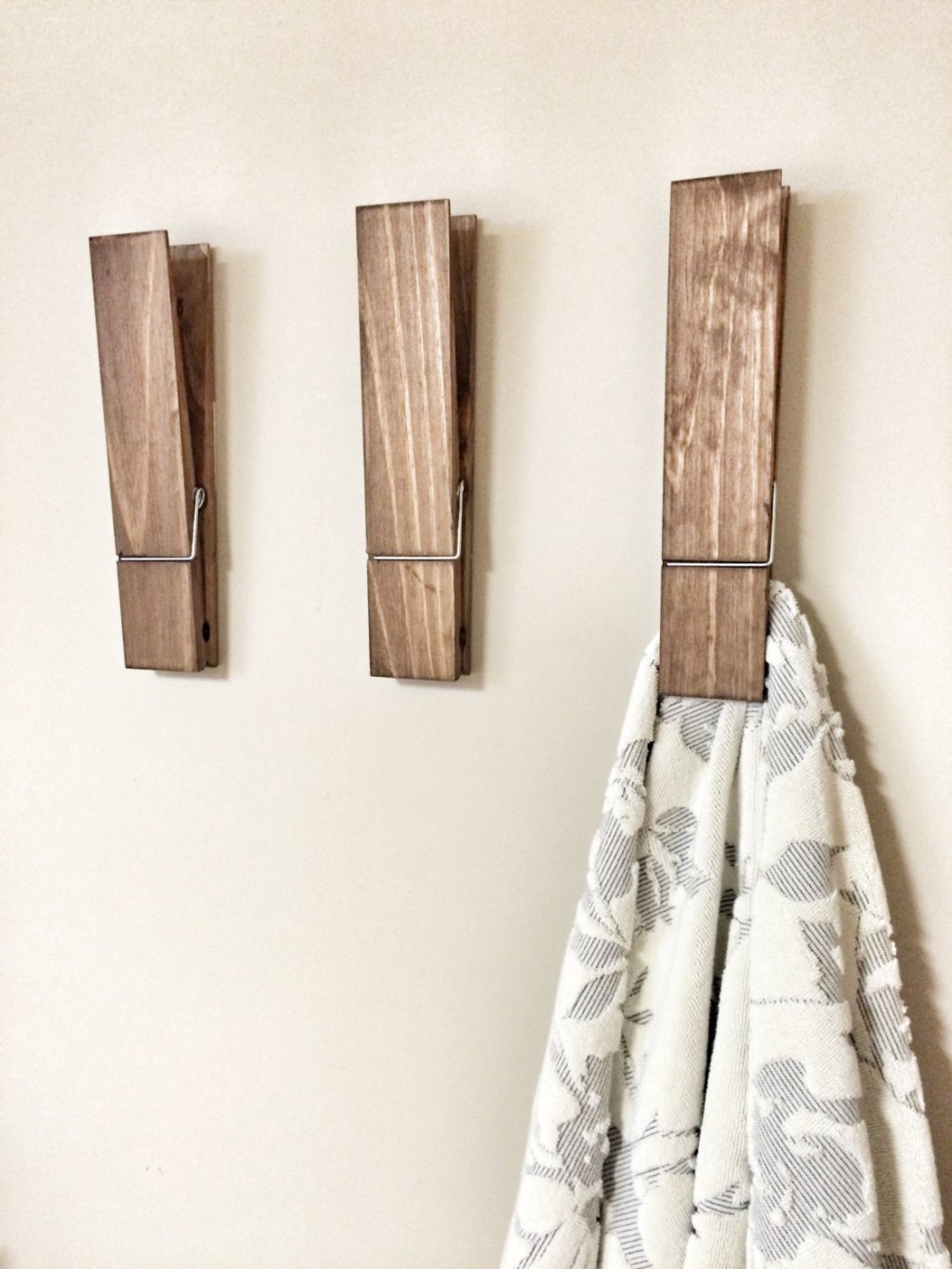
Spending just a bit of time scrolling DIY ideas on Pinterest or browsing search results on Etsy will will inevitably drive you to plenty of dubious shops. For example, an Etsy seller called Cherry Tree Gallery, based out of Winnipeg, Manitoba was selling jumbo clothes pins for $37.18 a pop in the spring of 2016. A quick dive through Google brings up a link to the exact same product via Woodcrafter.com for $5.28.
The seller was buying the unfinished clothes pins in bulk for $5.28 each (plus a flat rate of $15 shipping), then staining them and selling them for $37.18 plus shipping. I immediately navigated back to Etsy and read the posting in full, noting the description as hand-made. Thousands of people have favourited this particular item, but it was all a lie. A quick Etsy searched revealed dozens of other shops selling the exact same product, claiming the same handmade status. I sifted through all the reviews until I found these two four-star comments:
Louise: I felt that the quality of these were not the standard I would have expected for the amount paid. They were very loose and beginning to slide apart.
Elizabeth: After the receipt of the item I was disappointed to see the quality of my clips. The ones I had ordered to be coloured bleached birch were simply white, and in addition I could see strips of painting on the sides. It has disappointed me, especially when I think about the price of the item. (Translated from French)
In a society that runs on commercially generated goods, the idea that something is hand produced by individuals is very attractive. Each hand crafted item tells the story of the palms that shaped it. Shopping handmade goods lets us touch a human past that is less capitalist and less industrialized. Hand crafted items are not simply saught for their quality, but for the authenticity of trading tangible resources with everyday people, who benefit immediately on a measurable scale from the exchange. But Etsy shoppers are being played, their desires exploited, by sellers and businesses that have tapped into this cultural longing.
In early 2015 a series of news articles and blog posts rocketed around the internet about a seller called Three Bird Nest after it came to light that the company was selling mass-produced products on Etsy. Three Bird Nest is run by a woman named Alicia Shaffer and fronted by an attractive blonde model photographed in Instagram-worthy poses. Shaffer originally claimed to employ 25 local seamstresses in the production of her wares, but was later confirmed to source much of her inventory through foreign wholesale sellers. She was estimated to be raking in approximately $1 million in revenue annually at the time the story broke. In the end the story generated enough publicity that her peers drove her off Etsy, though she’s still out there hawking her wares. Unfortunately, the outraged masses ran out of steam shortly afterwards, despite the fact that she was just a big fish in an overflowing pond.
Since that time, very little has been written on the ongoing situation at Etsy. Most of the articles available relating to the plundering taking place behind Etsy’s seamingly hand crafted front doors is old, dating back to early to late spring of 2015 when the scandal involving Three Bird Nest broke, including a New York Times exposé on the issue. I have been unable to locate any recent pieces (2016) that speak to the ongoing problems of faux crafting on Etsy. It seems the issue of counterfeit and mass produced goods has dropped off the social radar, but if anything the situation is more out of control than before.
Unfortunately, counterfeit and faux crafted goods aren’t an issue solely relegated to Etsy. Perhaps we can’t blame Etsy for creating the problem, but we can certainly blame the company for facilitating it with loose policies that abandon its grass roots foundations. This is also a trend that has appeared on platforms like Facebook, or in-person craft markets and fairs. Perhaps you didn’t notice it before, but you will now. All in all, faux crafters have done a terrible disservice to the industry and to consumers.

 Jenny's Old House