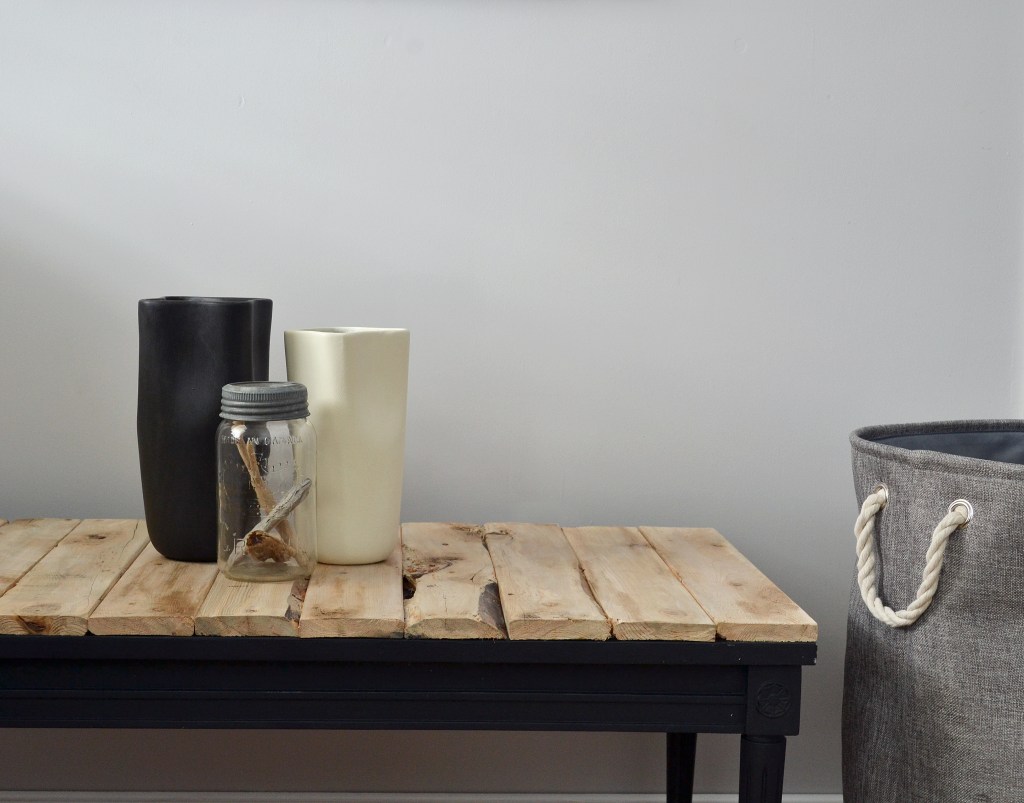
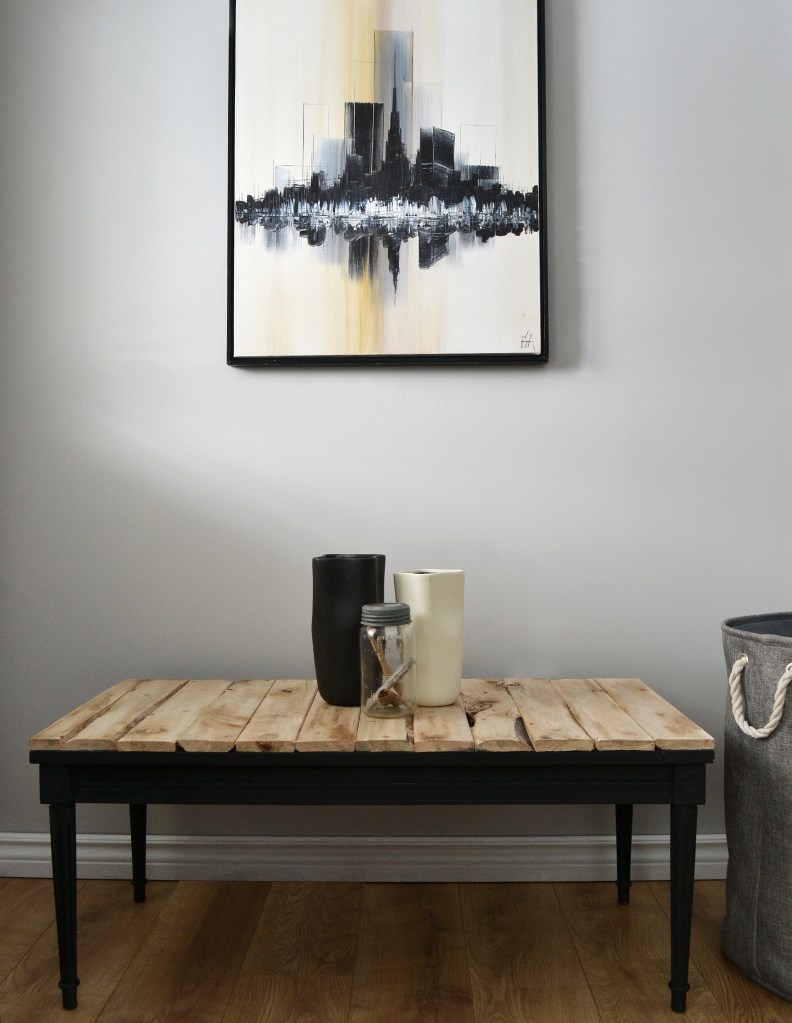
Do you ever shop your own house? If you don’t, you should. It’s a great way to spruce up your home’s design without buying more things or spending more money. Sometimes items simply need to be moved to breathe new life into them, sometimes they need tweaking. With a little house shopping and some salvaged pallet wood I was able to transform an old table into a rustic-inspired DIY pallet coffee table in our living room.
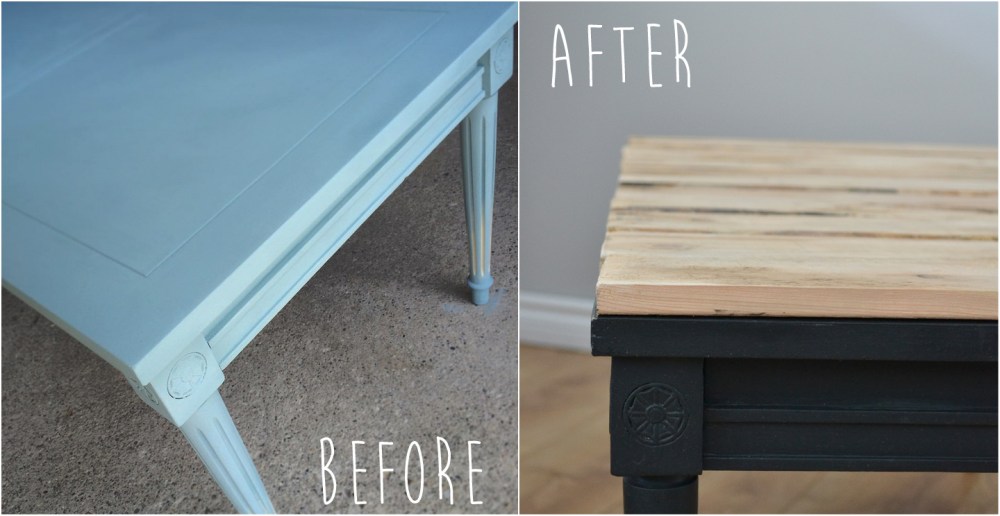
This little wooden coffee table has had a home in my basement for two years. Most recently it was styling itself as a turquoise number. It’s vintage, I think, and has been painted a dozen times. I often wonder what kind of wood would be revealed underneath if I had the patience to strip and sand it down. This table was about to solve all my living room woes as the main character in a makeover and swap.
Meet our living room table. She’s just not right post-reno. She’s too red, too traditional, too… big. This table is just no longer working for me, mostly because it is weighing down the room.
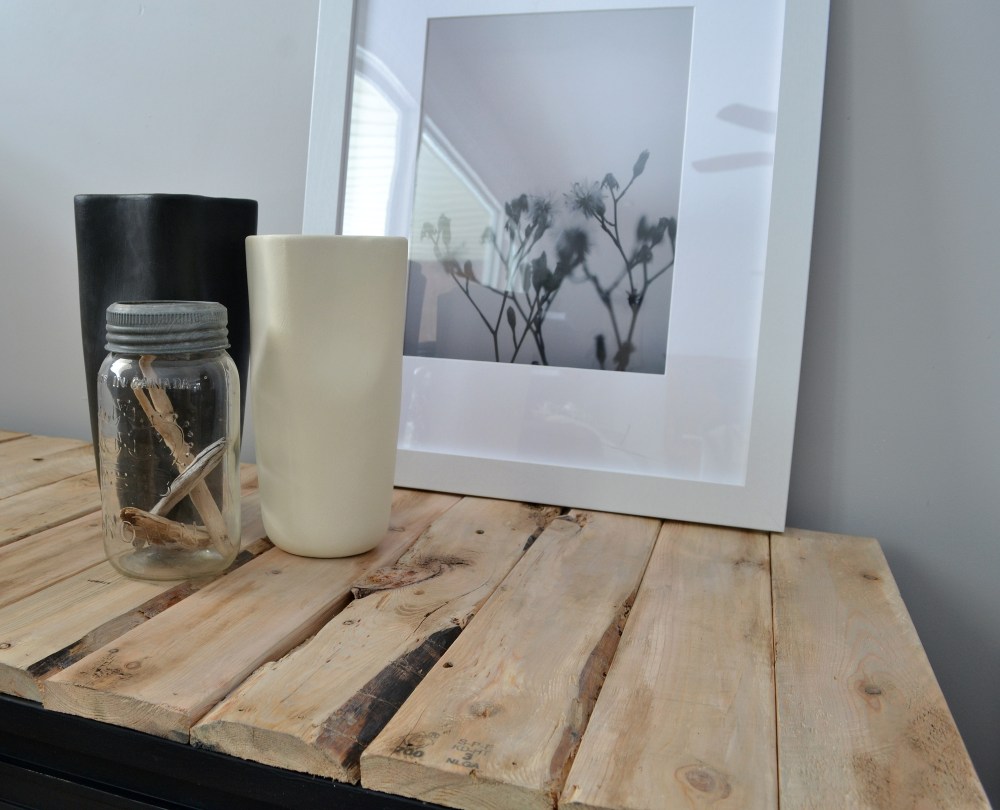
The plan I hatched was to paint the little turquoise table matte black. I used Annie Sloan Graphite mixed with a bit of matte black chalkboard paint to darken the hue (I had both of which on hand, bringing the grand total spent on this project to $0.00). The living room already had some black accents, and I thought a matte black table would kick things up a notch. I was so wrong; it was an epic lacklustre fail. In the end I was saved/inspired by Jen O’Brien at City Farmhouse, who has a pretty sweet coffee table with a planked top in her living room. And, suddenly I knew what to do: I would plank the top, turning it into a DIY pallet coffee table, adding infinite levels of texture and tone.
Now, knowing what to do and actually doing… not the same thing. I’ve never taken on a pallet project before because a) I didn’t know where to get one b) I didn’t feel the need and c) I’d read some gross stories about dirty gross pallets and chemicals and dirt. But, I said WTF and sped over to our local lumber yard, where I proceeded to berate a slightly alarmed employee until she pointed out a pile of old pallets that I was welcome to scavenge from. My luck ended there, because as I was about to find out, prying angry rusted nails out of wood is not so much fun as impossible hell.
TIPS TO REPLICATE THIS TABLE:
1. Acquire a circular saw and learn how to use it.
Unfortunately, for my 17-year-old inner self, I had to get over my long-standing fear of powered saws for this project. Prying apart the pallet was just not going to happen. The more force I applied, the more moody my pallet became. It would rather have splintered into pieces than be disassembled. A circular saw was the simplest answer, and within 5 minutes I had sliced all the wood of that pallet. Jenn 1: Pallet 0.
2. Use A Brad Nailer
I quickly attached all of the planks with a brad nailer, four nails to each pallet.
3. Paint Washes Are Your Friend
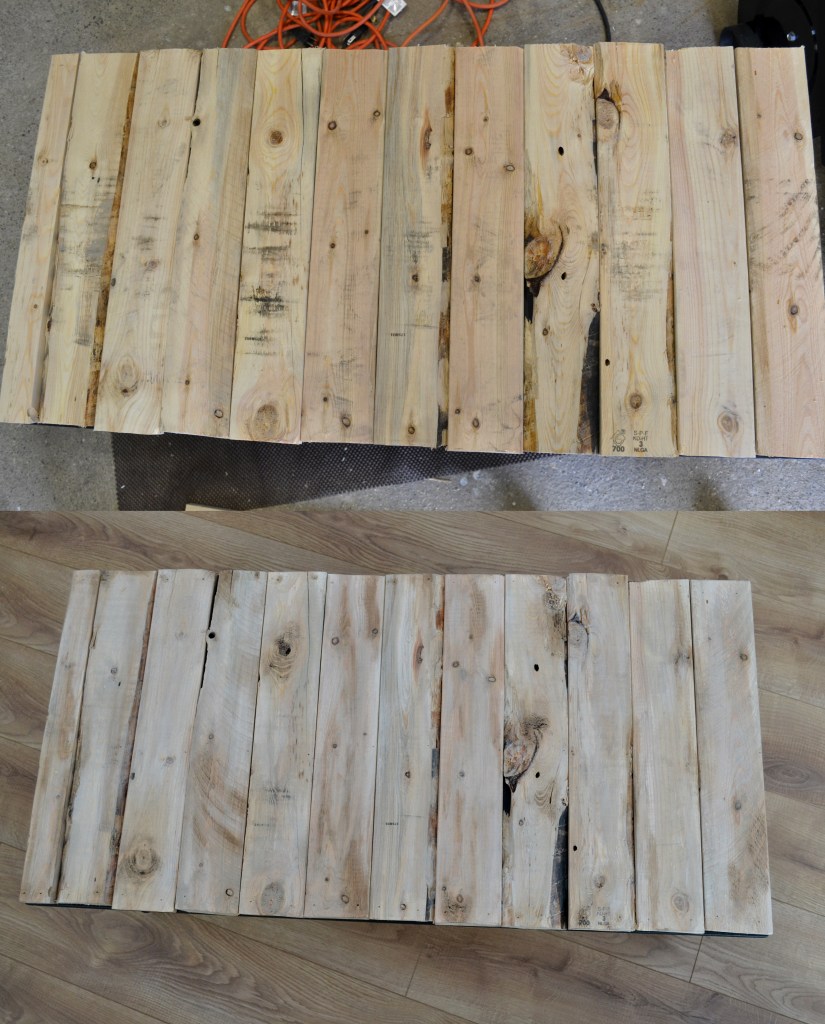
It turns out this pallet, which seemed so old, forlorn and perfect in the lumber yard, was hiding behind the smoke and mirrors of a rainy day. By the time it dried off in my garage I was forced to face the undeniable truth: this pallet was not nearly as old as it pretended to be with its rusty nails in that sodden lumber yard. I was most displeased. But, I have an old friend named Annie Sloan, and she had my back. A little left over Old White, a little left over CoCo, a wash cloth and a small cup of water and we were on our way to a washed, drift-wood, aged look. As you can see below, the top image is BEFORE and the bottom is AFTER the washes and wax. The colour is more much more neutral and the wood more distressed. I obviously cleaned the horizontal grease marks off.
4. Go Wild With Dark Wax
Strictly speaking this is not a painted top. There is some paint washing on it, but generally it is a lot of bare wood. You can definitely use dark wax on bare wood, but it’s not something people generally do. Judiciously applying dark wax helped me to magnify the texture of the wood and highlight the knots and tonal irregularities. It is definitely an important step in creating a most distressed aged wood finish.
5. Seal The Table
I used clear wax to create a seal on the table top. It transformed the rough surface, giving it a smooth water repellent feel, without changing the sheen. I obviously didn’t want to give this table top a glossy sheen, as I was going for the look of bare naked wood. I didn’t buff the wax, and let if cure before moving it upstairs.
The main reason I took on this weekend project was that there’s nothing specifically wrong with our old living room table, and I couldn’t bare to get rid of it, or spend money to replace a piece of quality furniture. It’s a great table. In fact, its a solid wood and Canadian made. It’s super functional and pairs great with the piano (which I wish I could do something about). It has a matching end table that didn’t fit in our new space. This table, and its matching side table cousin now look great in my basement with our grey couches. It was the perfect makeover and swap! Do you see those greige toss pillows with the oversized button? I swapped them downstairs too, onto the grey couches, sweetening the deal.


 Jenny's Old House