
This week something arrived in the mail for me, that I have been waiting for with barely suppressed impatience: a weaving. I’ve been interested in getting some textile art for our living room for a while. I first got a glimpse of this particular weaving trend from a news story in June about a young artist in Toronto named Carmen Vicente. I thought about making one myself for a while, but I’m extremely inexperienced with fibre arts. After a lot of hunting around I found a great weaving from Woodrow and Co. (located near Toronto) – note the black. I’m on such a black kick right now.
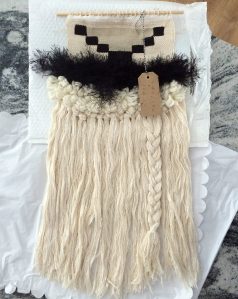
Isn’t it beautiful? The thing is, it isn’t just weaving that makes great pieces of art for your walls. Basically any textile provides untapped potential for unique art in your home. What I particularly LOVE about textile art is that it adds an additional layer of texture to your décor. What is the secret to a well styled space? Layers of texture. So, textile art… here we go:
Weavings
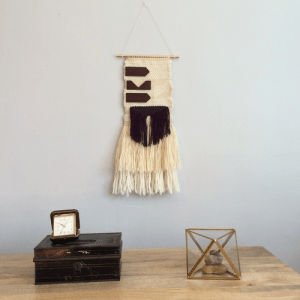
Weaving is old as sin. Well, maybe older. There is evidence that the craft of weaving textiles was present in the Palaeolithic era (that’s at a minimum 10,000 years ago and probably closer to 20,000). When did people begin hanging woven art in their homes? At least since the Ancient Greeks began decorating their homes with tapestries. European tapestry production boomed in the 14th century. Weaving, at a loom or by hand, is becoming increasingly popular. Etsy has a whole host of artisans crafting and selling beautiful woven wall hangings, while big name home décor stores have also hopped on board. You can also search Pinterest or Google for hundreds of tutorials, including great tips (dare I say hacks) to weave by hand without a loom. I love the one below for its leather detailing.
Framed Fabric Art
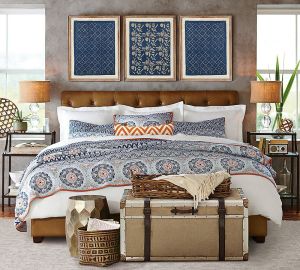
Framing fabric is perhaps one of the easiest DIY ways you can add textile art to your home. Framing fabric can be as simple as taping fabric to a piece of cardboard and slapping it into a ready made frame, and as complicated as purchasing designer or one-of-a-kind fabrics and having them professionally and custom framed. When our son was born I framed fabric as art for his nursery as an effective way to tie his bedding prints into the room’s décor. You can buy fabric prints, or framed fabric on-line from plenty of retailers, but framing your own fabric will bring you as close as is possible to unique for a fraction of the cost.
Rugs As Art
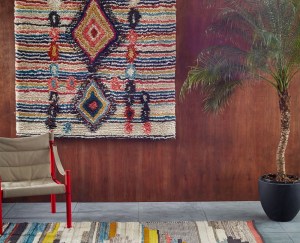
Rugs… for your floors. Or not. They don’t have to be something you walk on, worry about tracking dirt on, fear spilling wine on. A beautiful rug can become elevated to art. Little art or great big soaring massive pieces of art. Rugs make amazing textile art. The larger the rug the more complicated—and more expensive—the hanging becomes. For a really large heavy rug (for example a wool 5×7 area rug) you may very well have to fashion a wooden hanger.
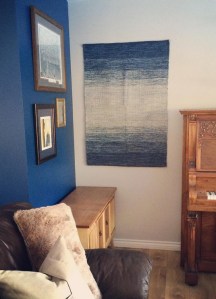
Since we completed our renovation I have been struggling in some areas of our home to find the right piece of art for a space. A couple weeks ago I became so frustrated that I ripped down the art that I had hung up most recently and removed all the screws from the wall in our living room. Then I stomped around the house glaring at the little plastic blue anchors marring my Cool Slate walls. In the end I was so fed up that I grabbed a $14 Walmart accent mat and nailed it to the wall. I like that $14 rug more than anything else so far.
One Final Note: Tapestry
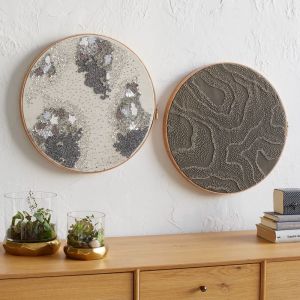
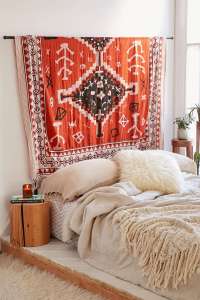
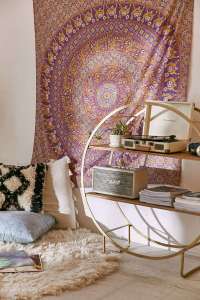
Tapestries are textile art comprised of weft-facing weaves, in which all the warp threads are hidden, and which compose complicated scenery, images, patterns and motifs. Tapestries are a very traditional form of textile wall art which dates back to the era of Ancient Greece, as I mentioned previously. Tapestries also make excellent art. Below are some modern takes on the Tapestry from Urban Outfitters.


 Jenny's Old House